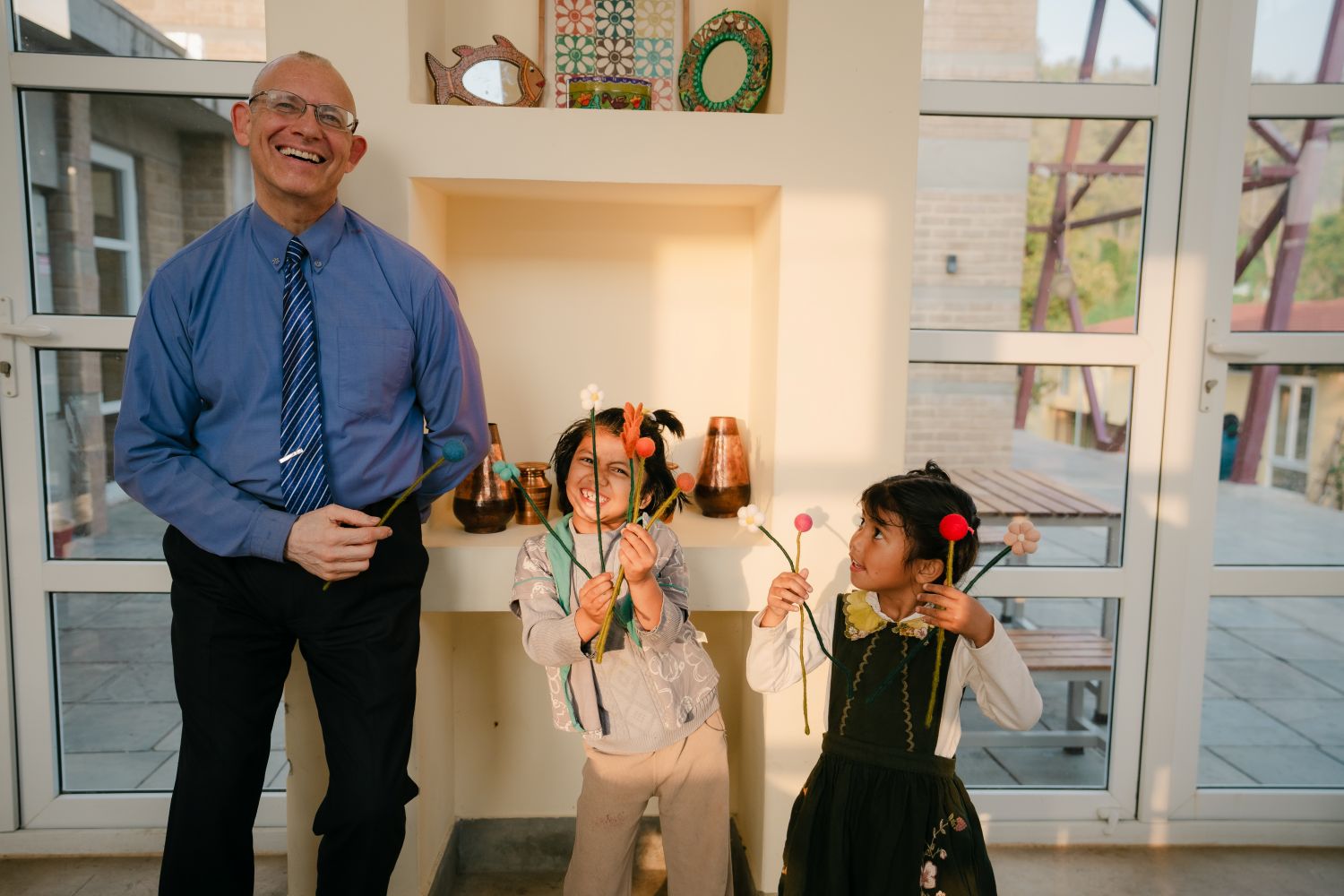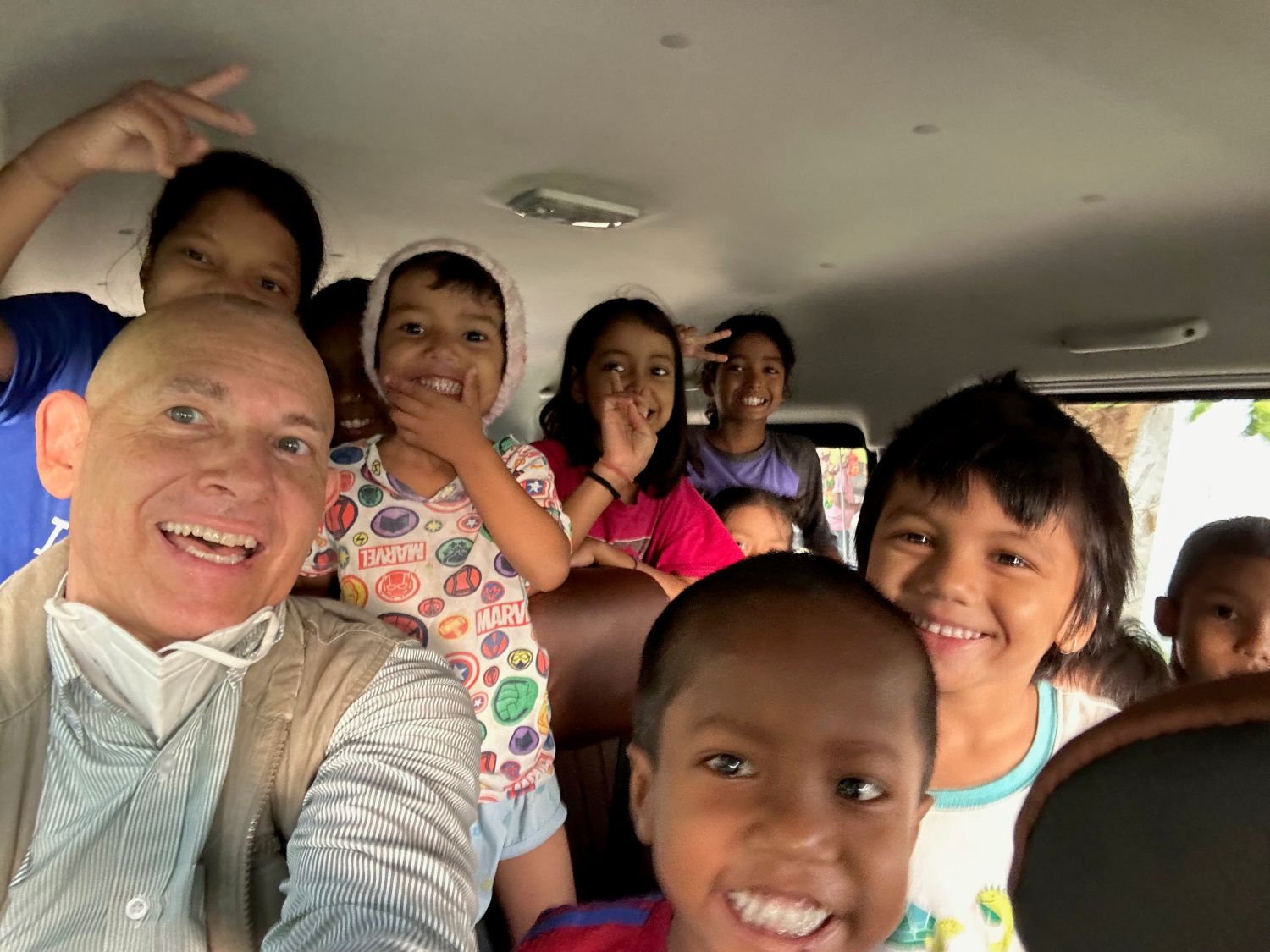
“Wait, you work as a School Director at Kopila Valley School in Nepal? That must be really difficult,” she said. “What?” I said, surprised. She continued, “Working with underprivileged, marginalized children who have so little. It must be really hard and depressing!”
And so begins another conversation to explain the amazing work of BlinkNow and the Kopila Valley School in Surkhet, Nepal, to an American.
The truth is, in fact, work at Kopila Valley is not depressing – it is full of joy.
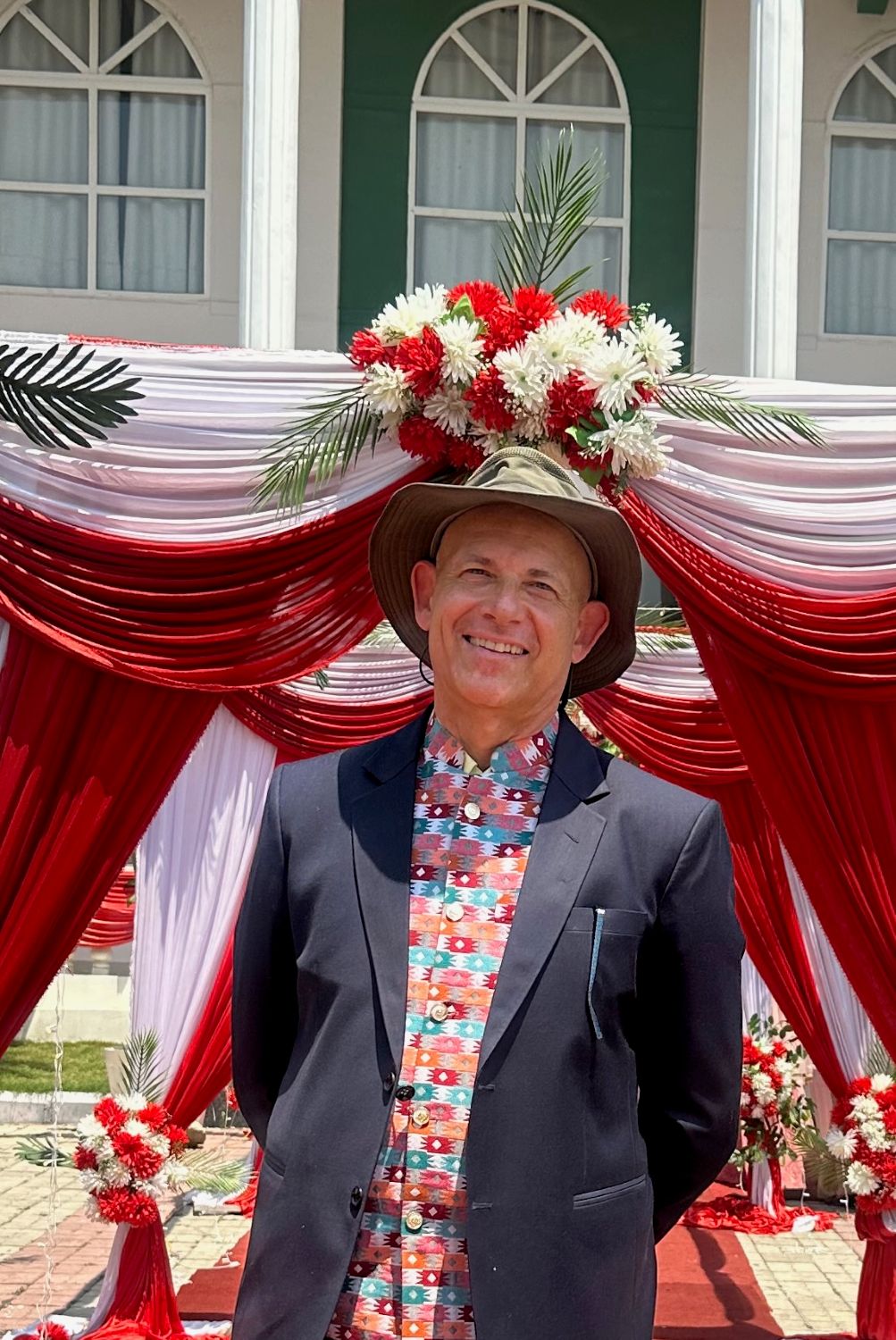
As a retired New Jersey teacher and school administrator for over 30 years, I journeyed to Kopila to serve as a school Director of Curriculum and Instruction. I spent more than two years with the BlinkNow staff and the Kopila Valley School administrators, as we set goals to strengthen the National Nepali Curriculum, enriching student classes with sustainability, futures programs, and health & wellness education.
Together we set ambitious goals to educate our kids in both place-based education and in the international academic standards that could give them real-life global opportunities. And I’m sure that some of that happened.
But the joy and love that the Kopila students and Nepali people gave to me far exceeded anything that I could have imparted on them. So, in trying to answer the question from the woman in front of me, I realized that there were eight lessons Kopila kids taught me.
1. The day starts with Namaste!
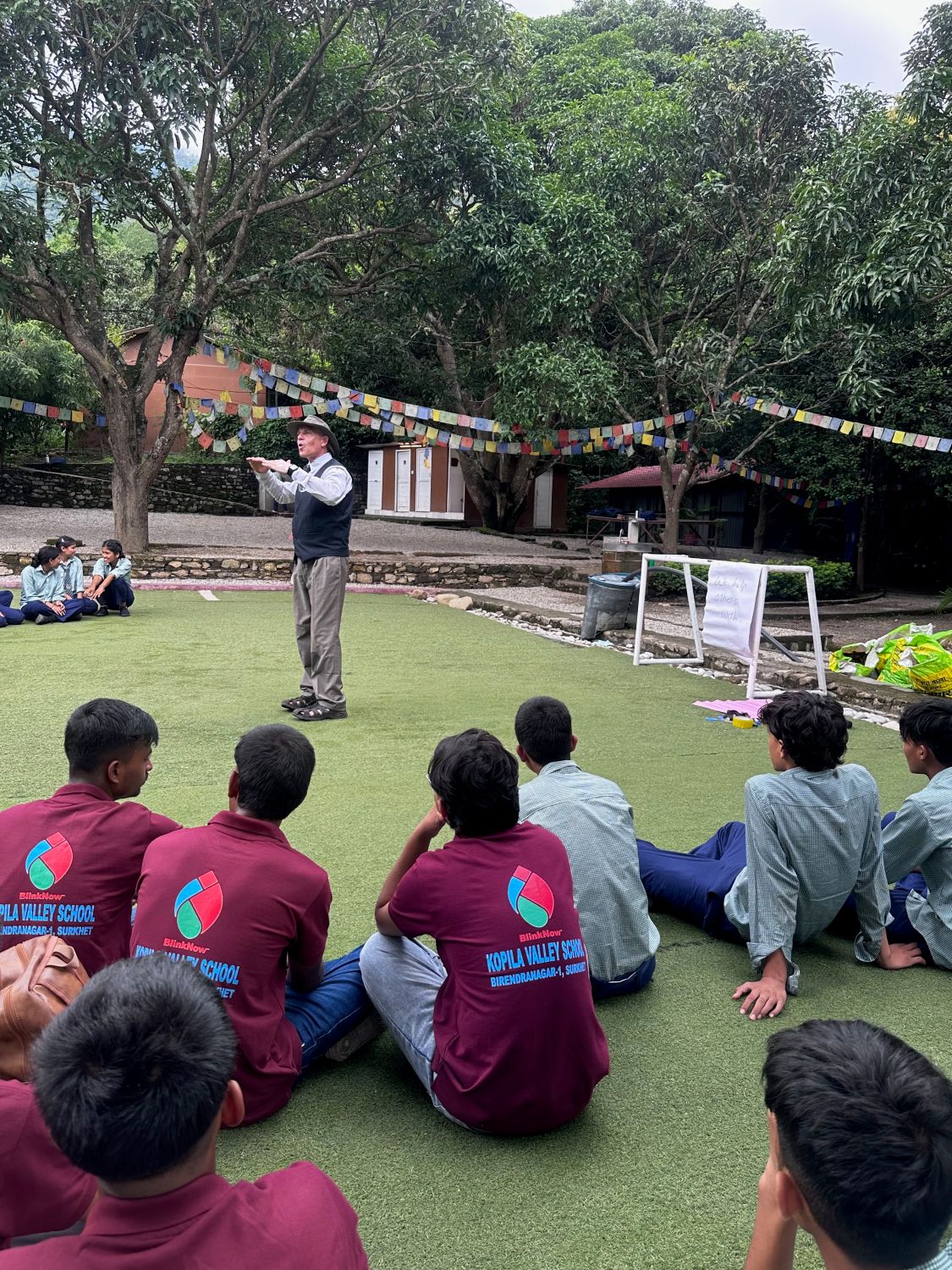
At the start of each day, students greet staff with “Namaste, sir,” or “Namaste, mam!” This tradition reminds us to meet another person’s eyes to say “hello,” “I see you,” and “I respect you.” Students initially greeted me with “Namaste, sir” or “Namaste, Doctor Barry.”
But they quickly learned that I was one of Maggie Doyne’s 8th grade teachers, and old enough to be her father. So, the greeting changed from “Namaste, Doctor Barry” to “Namaste, Hajurbuwa” (literally ‘hello Grandpa”), which the 8th graders quickly shortened to “Baje.”
While Baje also means grandfather, this greeting is culturally richer and honorific. Baje is a term of affection and respect for an older man who is viewed as wise, caring, or grandfatherly. It reflects warmth, respect, and recognition of your age and status in the community.
I was honored to be so quickly embraced by the Kopila kids with a greeting that recognized who I was, and how they saw and embraced me – “Namaste, Baje!” I’m not sure how American kids would create an equivalent greeting.
2. Joy Isn’t A Screen
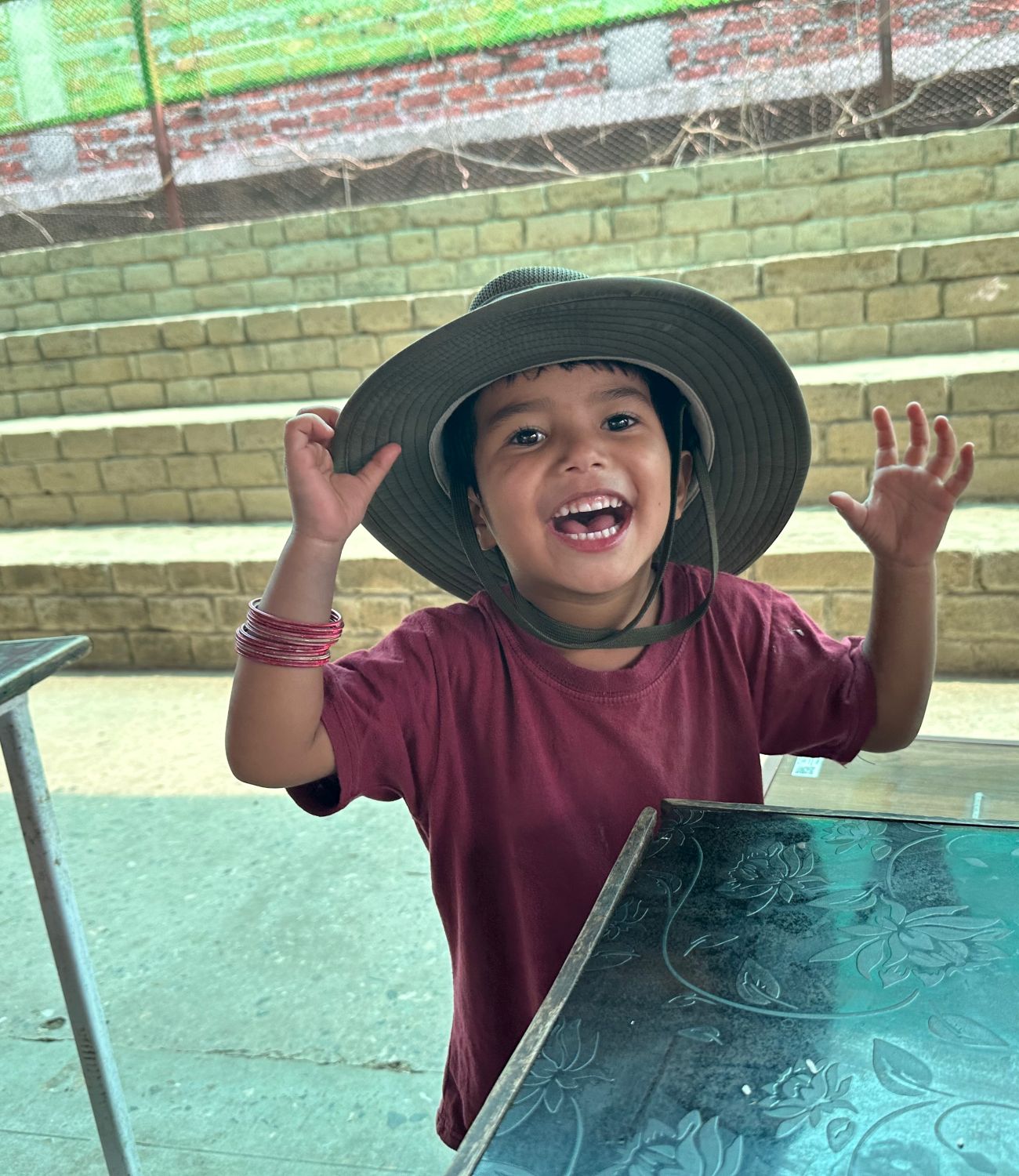
Namaste! Or Namaste Baje requires you to share your presence in the world. It means that you are looking at others, that you are engaged, that you care and are interested in socially sharing and talking with others.
After dealing with a decade of US kids glued to screens in social disengagement, Kopila’s kids are an absolute joy. They are present, engaged, they enjoy repartee and arguing. They demonstrate an infectious curiosity free from constant comparisons with Tik-Tok, Instagram, Snapchat, or Facebook. They energetically play table-tennis, football (soccer), volleyball, basketball, and chungi (similar to hack-e-sack) with a ball made from rubber-bands. And of course there is constant dancing!

One fall day around Dashain (October), when I noticed a scattering of students on the street in front of my house, I bought about seven dollars’ worth of paper kites and string – enough for 20 kites. I “gifted” them to my neighborhood kids and watched the unfiltered, communal joy as the kids ran through the streets chasing the wind. How could we translate this spirit into American school cultures?
3. Morning Assemblies Build a Learning Community

A typical American school day begins with morning announcements blasted over the intercom. School events, sports scores, birthdays, and club reminders all shouted into separate, isolated student classrooms each morning.
By contrast, Kopila begins the day with whole-school assemblies at least three times a week. Everyone shows up – administrators, students and staff, the entire learning community – together in one collaborative shared space.
On Maggie Mondays, founder Maggie Doyne shares Aesop-like wisdom delivered from one of the founders and the CEO of Kopila. Health & Wellness Wednesdays are devoted to topics that include brushing teeth, iron supplements, and menstruation. All are talked about honestly and openly, with demonstrations in order to de-stigmatize issues so they create a school culture where students, especially girls, learn they need not be ashamed of their bodies or their needs.
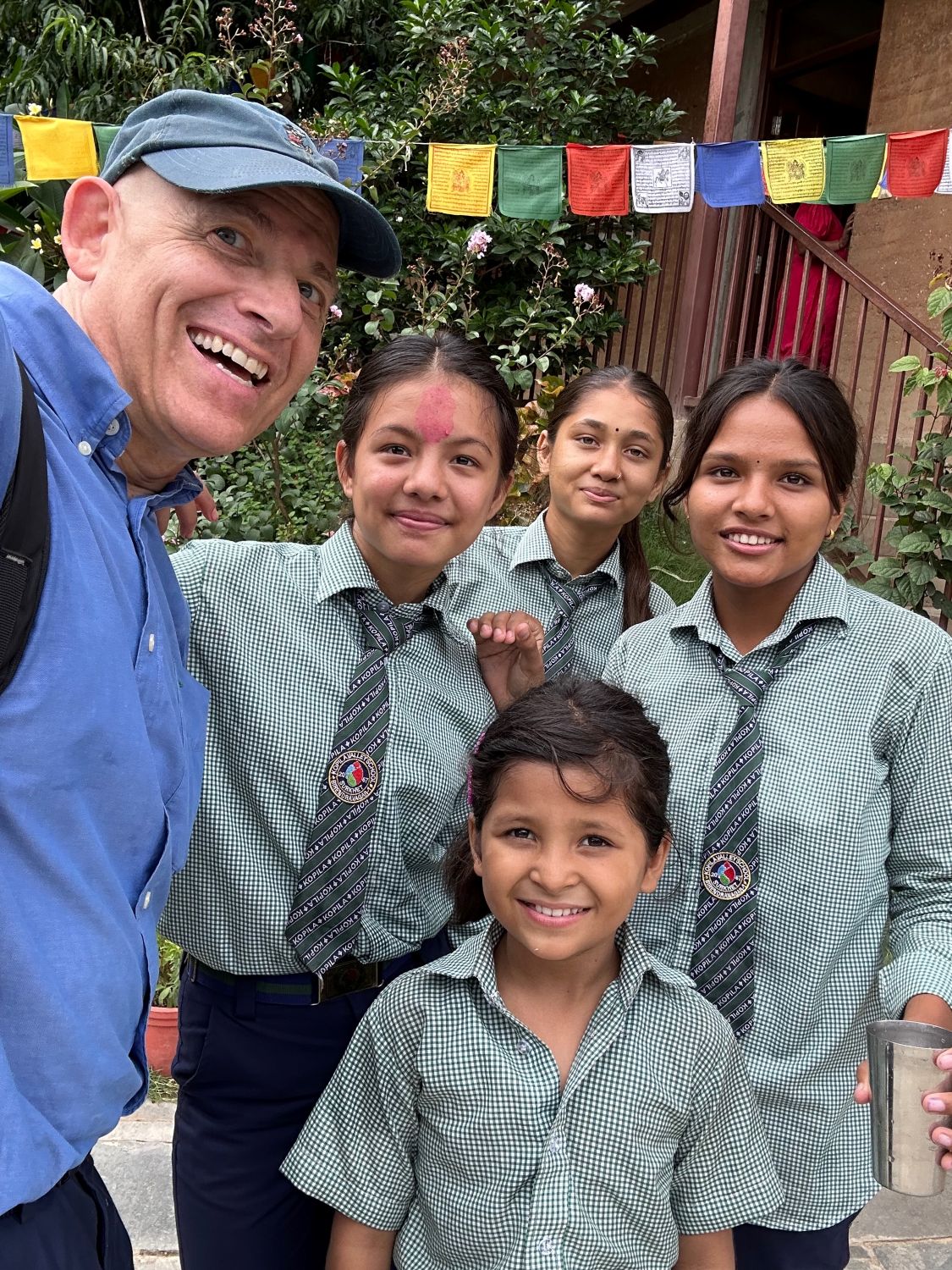
Fun Fridays – my favorite – are full of amazing, colorful, traditionally outfitted student performances. Students from grades 1 – 12 dance traditional and modern dances. Many a day, I would pinch myself thinking I was at a Disneyworld performance at Epcot. The students were stunningly choreographed, professional, and admired by fellow students.
These student performances were for each other. I felt that in this way, students learned to genuinely celebrate one another. Students were never jeered or derided for their performing; rather, student performances were proudly cheered and supported by peers. Even if someone was not academically gifted, they may be spectacularly arts gifted – and students benefitted from this larger-family gathering/performance.
In America, I want to bring back that whole-school morning gathering where students can develop a deep respect and appreciation for each other’s gifts and talents.
4. Food, The Way It’s Supposed to Be

After morning assemblies, around 9:30 am, I love to roam the Kopila cafeteria. There you will find dedicated, fun-loving, incredible cooks (Didis), peeling, shredding, and dicing the plants and vegetables that were just delivered from the locally sourced, woman-run cooperatives in the Surkhet valley. Cauliflower, spinach, pumpkin, jackfruit, beans, whatever’s in season.
Lunch will consist of one of these side dishes, saag from spinach for example, paired with traditional spicy dal made from lentils and beans served with rice to make a complete nutrient-dense, fiber-rich dal-bat, served daily at Kopila.
I expected the traditional Nepali, spicy diet to exact a toll on my digestive system. It didn’t. I drank about two cups of whole milk from the Kopila cows and also drank plenty of fresh yogurt daily – thinking it would drive my borderline cholesterol higher. It didn’t.

While I didn’t go to Nepal to improve my cholesterol, after months of eating a mostly plant-based diet of exactly what my students ate, my doctor confirmed I am in great health when I returned to the U.S.
For nearly 30 years of watching US kids fall into the school lunch line to choose pizza, tater-tots, and hamburgers, I was thrilled to join in a student-centered nutritious program that was sustaining all of our Kopila students for a full afternoon of learning. Could we learn from this in America?
5. Radical Inclusivity
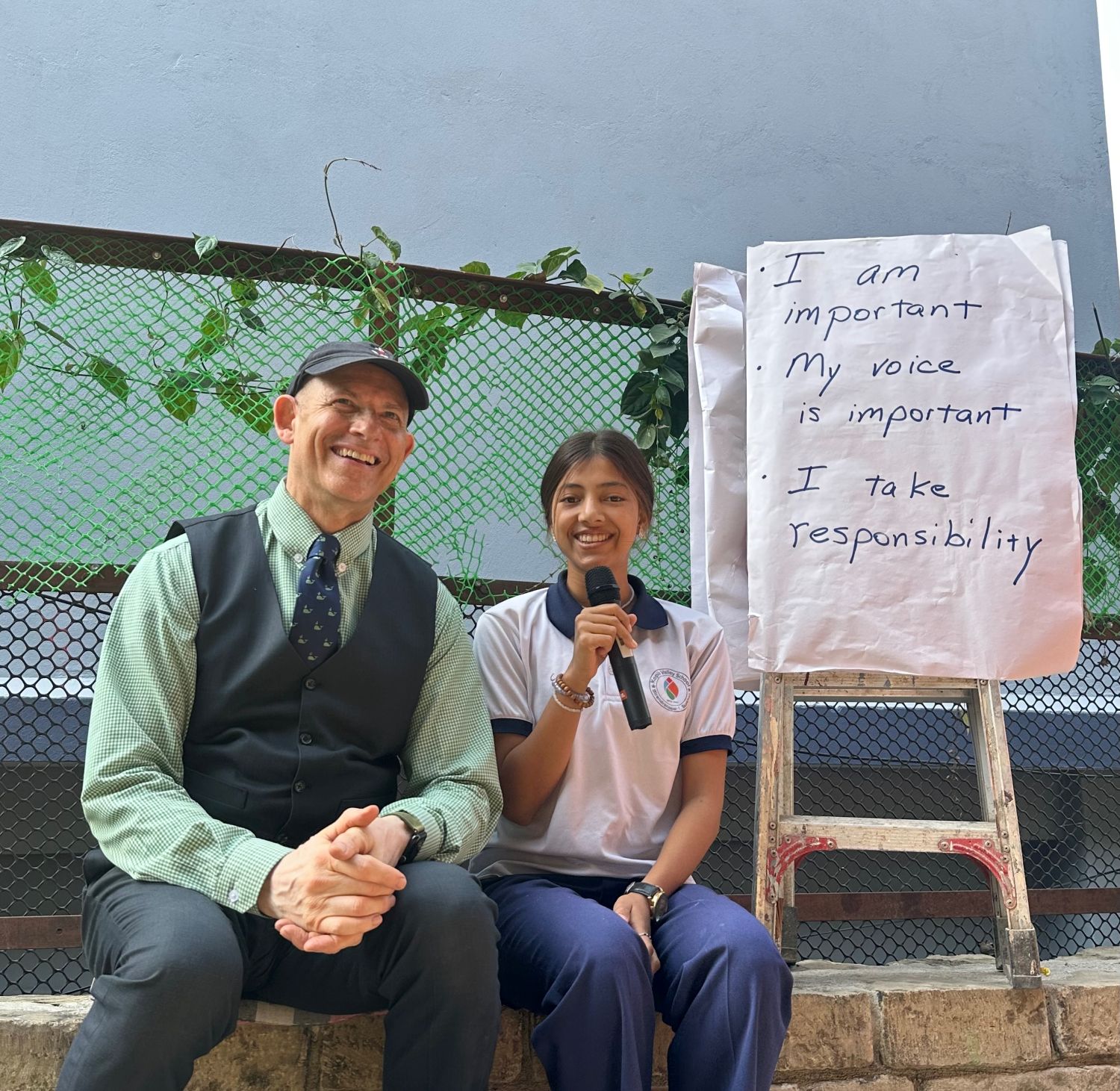
Among other measures, Kopila Valley deploys a survey called the Developmental Assets Profile (DAP). Our students routinely score high in the areas of feeling included and belonging. Throughout the day, this is constantly, loudly represented around campus. There is no social distance stigma here as all students – older and younger, boys and girls, hold-hands, hug, hang on each other, and jump on each other’s backs.
Their physical body language is a representation of their emotional safety with one another. There is a tangible sense of belonging, feeling supported and accepted by others – no matter who you are. I wish this too for our American campuses.
6. Sustainability, Naturally

Walking onto Kopila campus in the early morning is to feel alive. You might know Kopila as one of the Top 10 World’s Best Schools in Environmental Action. But that minimizes the behind-the-scenes infrastructure.
On campus, solar panels provide electricity for lights, classrooms, cooking, and EV recharging. Filtered monsoon rains are captured to provide clean drinking water throughout the year.
Students attend gardening class twice a week to plant and garden the food that is part of their daily diet, and Kopila kids know about animals and where milk and animal protein come from because they visit the Kopila farm cows, goats, turkeys, chickens and ducks. While communities just beyond Kopila’s gates struggle with electricity, clean water, and food insecurity, Kopila serves as a model for solving these issues.
At Kopila, school outings are sustainability outings, planned and scheduled to teach students about life-cycles, ecosystems, soil health, and the recycling practices of international conglomerates. These are all built into the curriculum.
The natural beauty of Kopila’s 4-acre, subtropical campus makes teaching “outside” ever-present. At Kopila, curriculum and sustainability are woven together for students to synthesize life skills, and see sustainability, naturally. In America, when we talk about getting kids “outside,” it’s usually an enrichment activity; a field trip beyond campus, a unit extension, a break from “real learning,” or sustainability as a club.
I wish there were more American campuses like Kopila’s.
7. Nature and EVs are Part of Nepali Culture
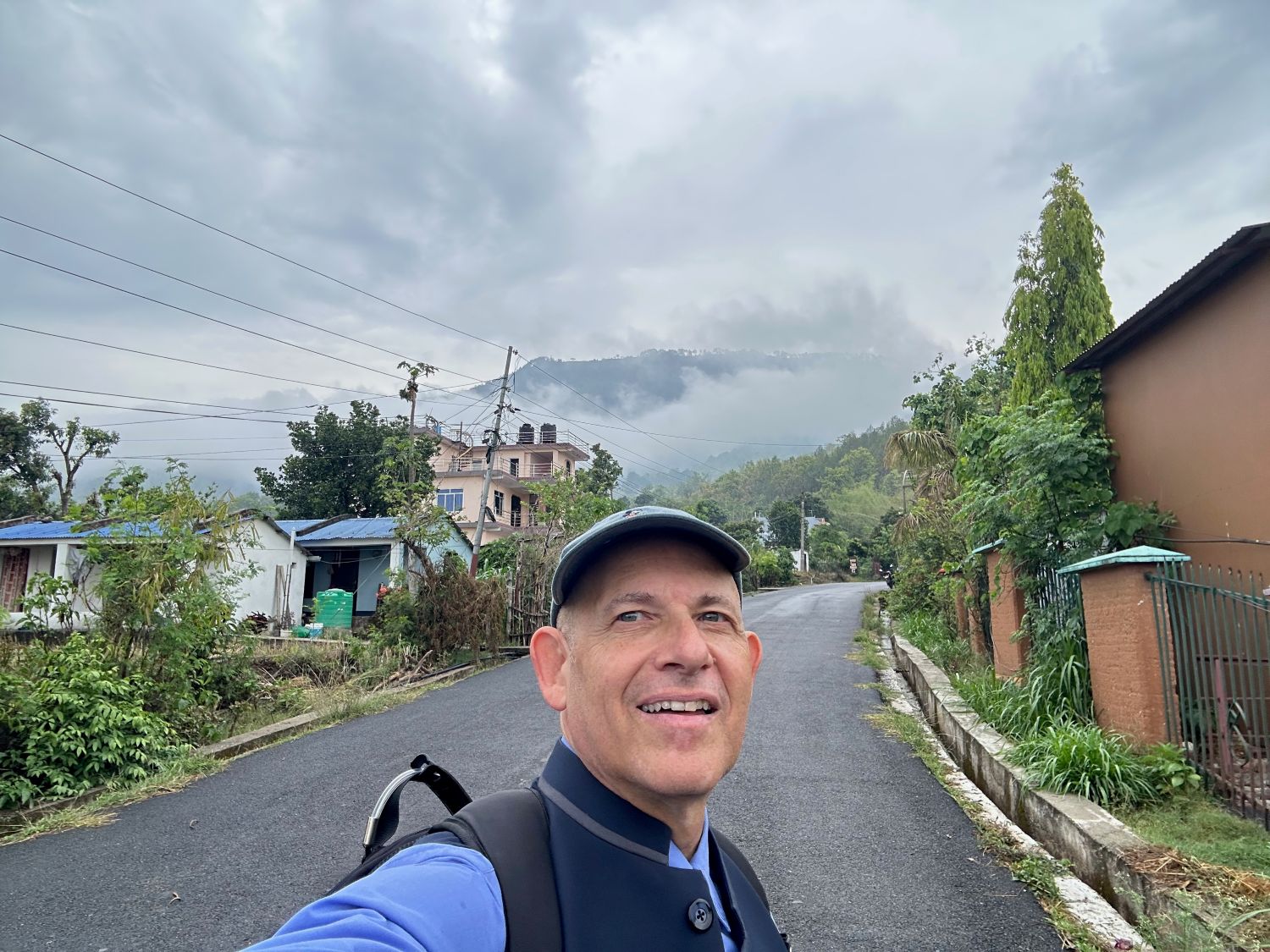
The first lessons I noticed about Kopila were personal. Over time, I realized that some of Kopila’s strengths were embedded in its national culture.
For example, the New York Times recently reported that 74% of new vehicles sold in Nepal are EVs. Electric scooters, bikes, vans, and buses are everywhere. It’s obvious that the state-owned Nepal Electricity Authority (NEA) has spent years building out renewal power, encouraging solar panel installations, and building electric charging stations to support these newer vehicles, helped in part by a proximity to China.
These lessons are not lost on our Kopila kids. While the local power grid suffers daily outages, local solar-powered stations and battery backups continuously power everything needed. To teach sustainability and renewable power in Nepal, one only needs to contrast the antiquated, unreliable, electric power grid with the solar power panels on the roof that power the Kopila EV buses, vans, or scooters.
For Kopila students, renewable energy isn’t abstract; it’s what successfully powers everything at Kopila. Understandably, this is a harder lesson to teach in much of America.
8. Persistence, Perseverance, and Academic Achievement

At the end of 8th Grade, students must pass the government mandated Basic Level Exam (BLE), or they will not graduate to grade 9. This happens again at the end of grade 10 for the Secondary Education Exam (SEE), or students will not graduate with the equivalent of a high school diploma to go on to college or trade school. So, the pressure on Kopila students is real.
High pressure, high stakes, real consequences.
While students acknowledge their apprehension and anxiety towards these tests, they also demonstrate a tangible resolution. For example, at the end of my first year at Kopila, a group of seven 10th grade students approached me to request after-school, Saturday, and holiday tutoring. In Nepal, tutoring is called “tuition,” and their expectation was for our teaching staff to instruct them in one-on-one and small group instruction to help them pass their exams. Their academic determination inspired me.
So, we – the administrators and staff at Kopila – worked collaboratively to build out before school, after school, holiday, and Saturday tutoring sessions. This group effort was so successful that all of our students passed the 10th grade SEE, some with the highest recorded scores in Kopila’s history.
What did I learn? Kopila’s students self-advocate, and are perseverant and persistent for their needs. They inspired me by their organic grit and determination. Do I see this in our American kids – sure, sometimes. But I would love to see it more.

Final Thoughts
Kopila may sound idyllic. If so, I’m not being honest. Beyond Kopila’s gates, home life and environmental issues can be ever-present and challenging. There are real pressures for kids.
I don’t want to minimize the challenges and the constraints that are placed upon Kopila Valley and the surrounding under-resourced, developing country. Comparing Kopila kids to kids in America is difficult as different contexts require different solutions. Nepal still has political unrest, serious public health realities, and multi-generational impoverishment.
But in responding to the statements, “it must be difficult; it must be hard and depressing,” I would say, “difficult and hard” – absolutely. “Depressing?” Nothing could be further from the truth.
After more than 2 years of calling Kopila and Nepal my second home, I can tell you that the good-natured, engaged, dedicated and hard-working students of Kopila are a reminder of something I hope we can regain in America. Kopila kids can teach us many things: how we greet each other, where we play, how we gather and build stronger learning communities, what we eat, how we embrace others, how we think about sustainability, solar power, and EVs, and how kids self-advocate and build determination.
We need to be open and receptive to these Kopila voices and lessons, as our American schools have much to learn from what Kopila students can teach us.