
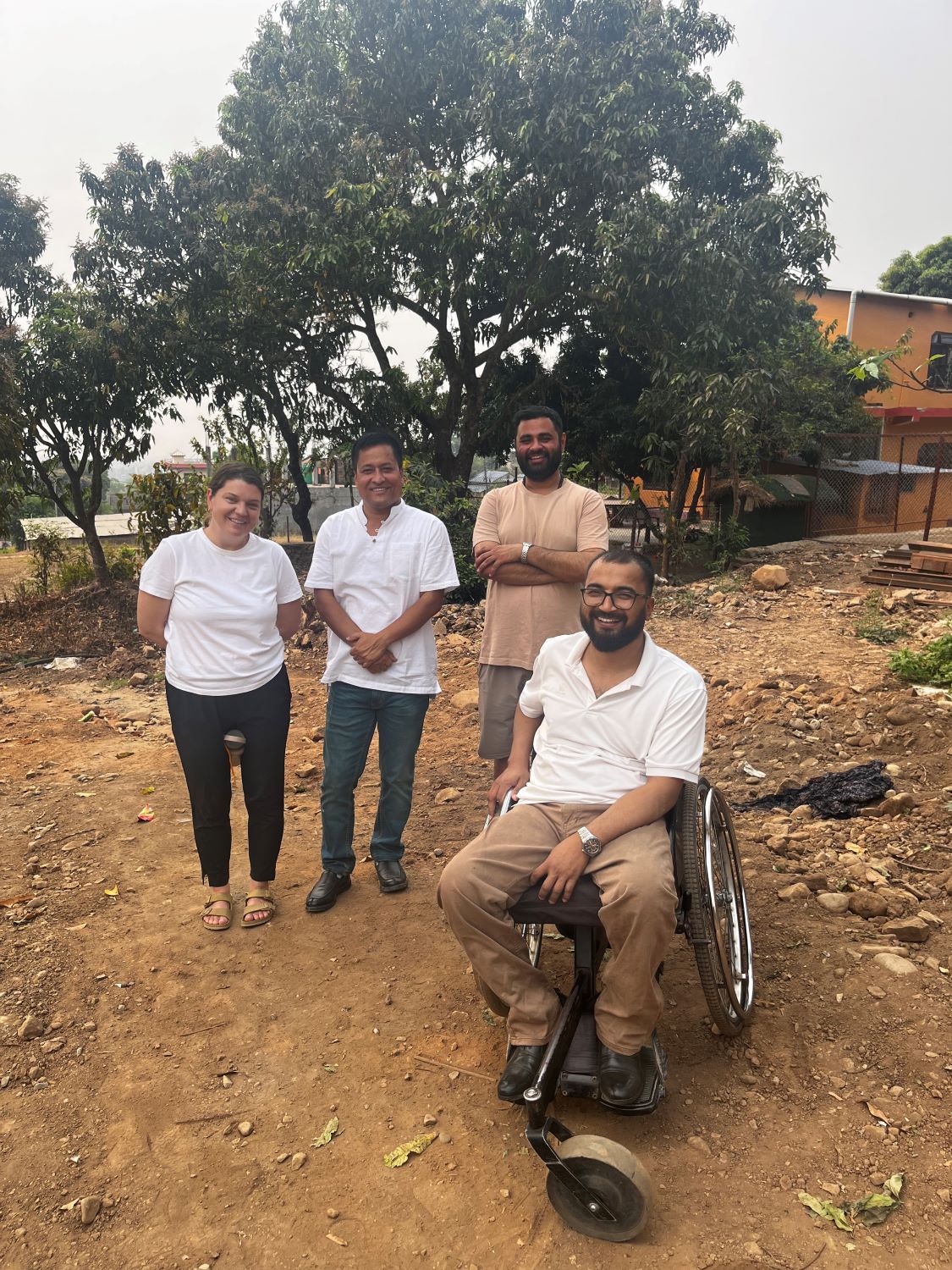
Walk and Wheel: Children’s Village Accessibility Tour
At the Kopila Valley Children’s Village, we believe that every child deserves to feel safe, loved, and like they belong. That means more than just offering food, shelter, and education—it means building a place where children of all abilities can thrive. Accessibility isn’t an afterthought for us; it’s a reflection of the dignity and care we strive to show every child who comes through our gates.
From the very beginning, our vision for the Children’s Village has centered on belonging. Children with different abilities are too often left out of spaces where they could learn, play, and grow alongside their peers. We set out to change that. And to make sure we’re doing it right, we turned to a trusted friend.
Today, we’re hearing from Dibya Khadka, a passionate advocate for accessibility who brings personal insight and lived experience to our projects. Dibya joined us for a ‘Walk and Wheel’—a tour of the new Children’s Village through the eyes of someone who uses a wheelchair. Here’s what Dibya had to say:
Back in 2019, we did a ‘Walk and Wheel’ at the newly constructed Kopila Valley School. Our goal then was to ensure that the greenest school in Nepal was also one of the most accessible—and we succeeded.
Recently, I had another proud moment: wheeling around the new Kopila Valley Children’s Village to make sure it is also fully accessible. It was heartwarming to see how every corner of the village is designed with thoughtful welcome – including the sprawling library, the bathrooms, and the playgrounds – for children of all abilities to feel at home.
The walkways are navigable and smooth, including ramps throughout the campus. Wide doorways make it easy to get in and out of rooms and buildings. The library will have an elevator from the first floor to the second floor. The bathrooms follow international guidelines for wide doorways, turning space, and sinks that are easy to reach.
I wish every new construction site in my hometown did a ‘Walk and Wheel’ like this to ensure accessibility.
Dibya Khadka
