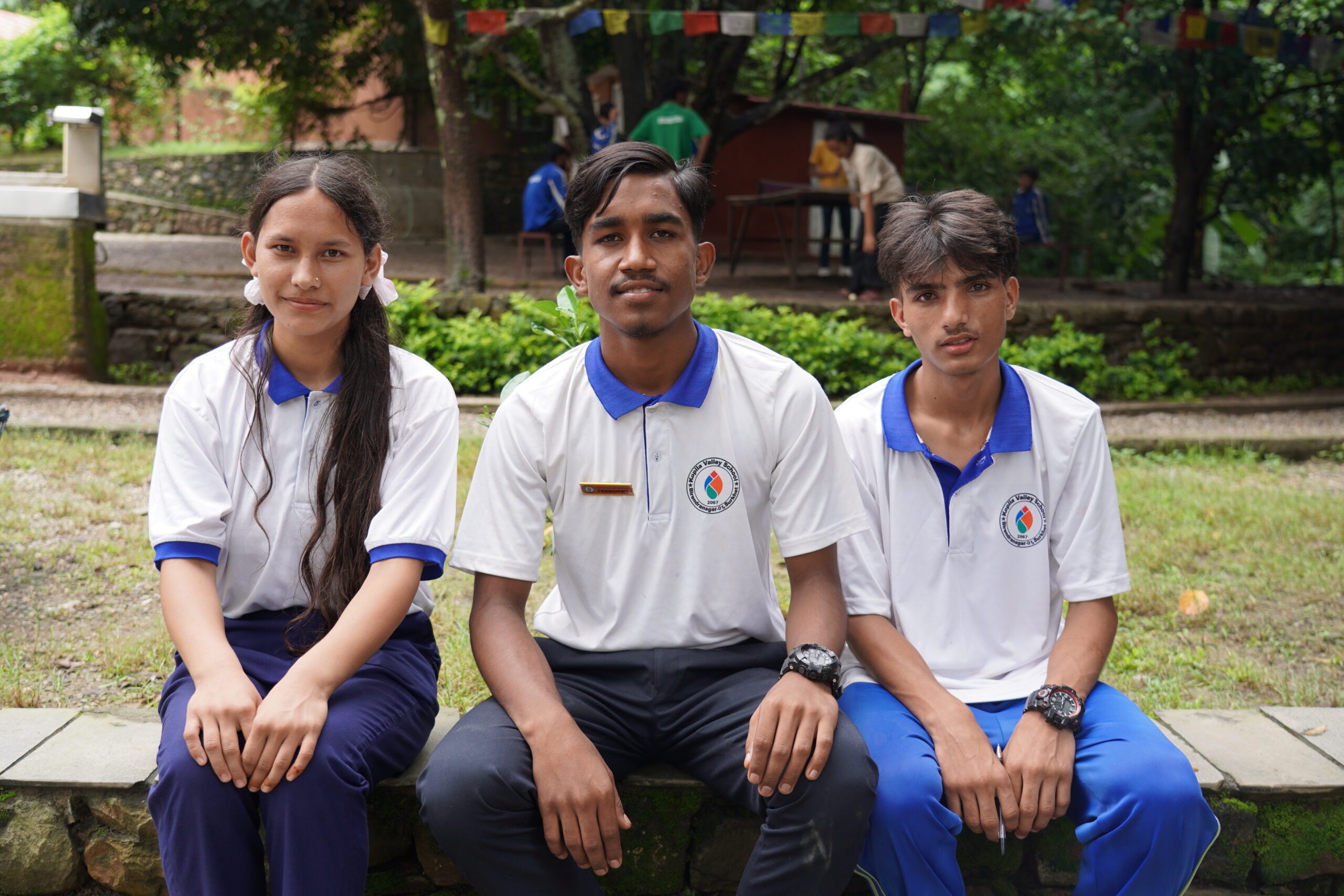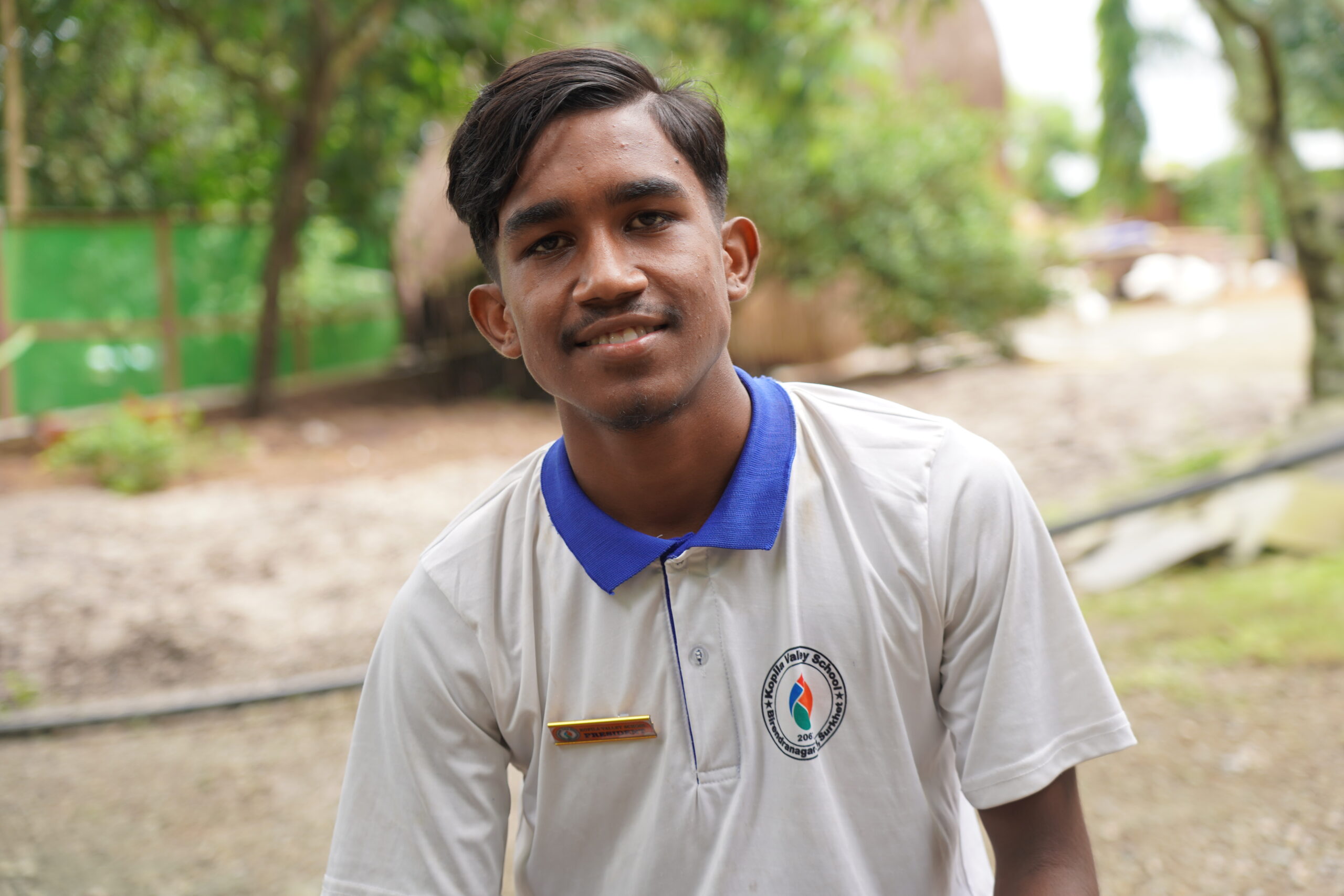
In a peaceful community of many migrants, a boy swam in a river. While his mother and older sister spent their days breaking rocks under the scorching heat for daily wages, all his childhood, he swam in that river. Although there weren’t any fish in there, he would pretend as if he was fishing. It held the currents of his childhood. His name was Bishal.
Each day, as he sat by the riverbank with his mother and sister, Bishal watched boys and girls his age cross the river with their dreams in their school bags. When all the students finished crossing the river, suddenly the whole city was quiet. Bishal wondered what kids do at the school. Sometimes he would tag along behind them to their school gate, and the security guard would scurry him away.
Such was his fate, Bishal believed.
Little did he know that soon, in a town with many people teetering on the edge of poverty, a hope was going to rise for his family.
“Your heart becomes the heaviest thing to carry when it’s overflowing with love for someone who always leaves you feeling unworthy of love. My father left my family for another woman after 15 days of my birth. Although I had never seen him, I was aware of his existence. Somewhere deep down I longed to meet him, see what personalities and appearances I inherited. He never came to visit my family, never came to see me, never cared for me–a son he abandoned just after bringing him into a world without hope.
“Maybe it was his absence that made us struggle financially. But my mother did all she could to put food on our plates at the end of the day, whether it was breaking rocks by the riverbank, selling vegetables, or picking up part-time house cleaning jobs that were offered to her seldomly. Amongst all this struggle there was nothing more than my want to go to school. I longed to walk alongside the young boys and girls I saw going to school every morning.”
“Then one day, I too was strapped in a bagpack, adorned with a polished uniform that smelled of something new. That day, I walked alongside those young boys and girls, greeted the security guards and entered the school gate with a smile of pure joy and excitement.”
Bishal was met by a kind-hearted young American teenager who called herself Maggie. She enrolled his sister and him in school in the town. One by one, she started enrolling other children who needed support and someone to call a guardian, a parent.
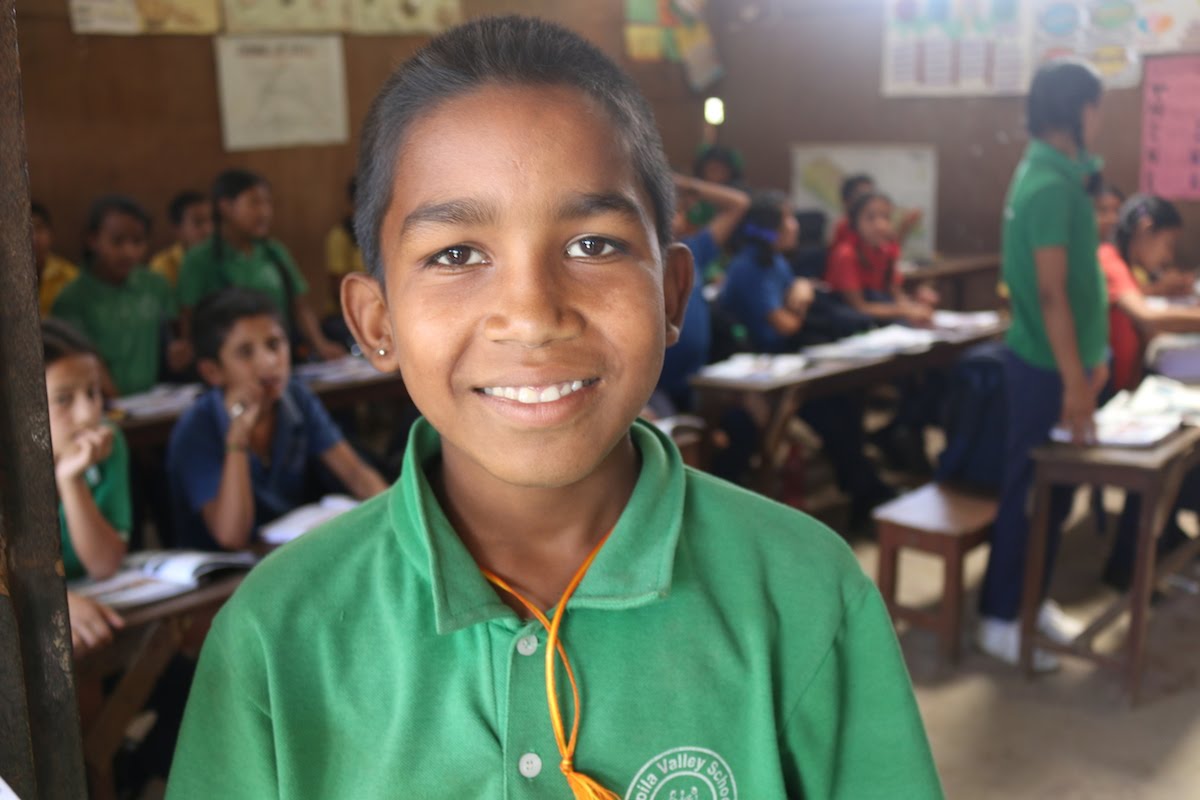
When Maggie and Tope decided to open their own school, to demonstrate a new type of education, Bishal and his older sister transferred to Kopila Valley School. “After our enrollment, I saw a spark in my mom’s eyes. She seemed relieved, as if some burden was lifted from her worried soul,” expresses Bishal. “She no longer had to worry about our lunch, our snacks, school, giving us a proper childhood, because Kopila Valley School was just doing that.” After a year, Bishal’s mother secured a job as a cook at the Women’s Center. “It was the biggest blessing to not see my mom out in the hot summer heat, breaking rocks by the riverbank. She received a job where she was respected, appreciated, loved, and embraced as who she is.”
From thriving in Kopila Valley School, Bishal one day chose to transform. When an opportunity presented itself, he ran for School President in the year 2023 when he was in 12th grade. “I think it stemmed from not having a leader figure in my family. My mom was heartbroken and quiet, determined to make ends meet. I used to see other fathers taking on the leadership role in the family, and I thought my family was unusual, unfortunate. I needed somebody to bridge that gap, but who other than me? And that needed to start from learning to be a leader–solving problems, listening to people, and always taking action.” The decision was easy to make for him, since previous school student government bodies had left a remarkable imprint on him. He was not just inspired but awed by the work of previous Presidents, leaving him wanting more in life. He knew his last year at the school had to mean something.
“I believe in being approachable and accessible to all students.” Bishal’s presidency is marked by innovation and inclusivity. He initiated more education on social topics including “period talks,” “LGBTQI,” and “breast-feeding,” and now these issues are often addressed by informational sessions and an inspirational speaker series.
Bishal’s impact goes beyond the physical changes he brought to the school. He inspired a culture of kindness and empathy, encouraging students to look out for one another. His infectious optimism and belief in the power of unity sparks a chain reaction, getting everyone together, united and tightly-knit.
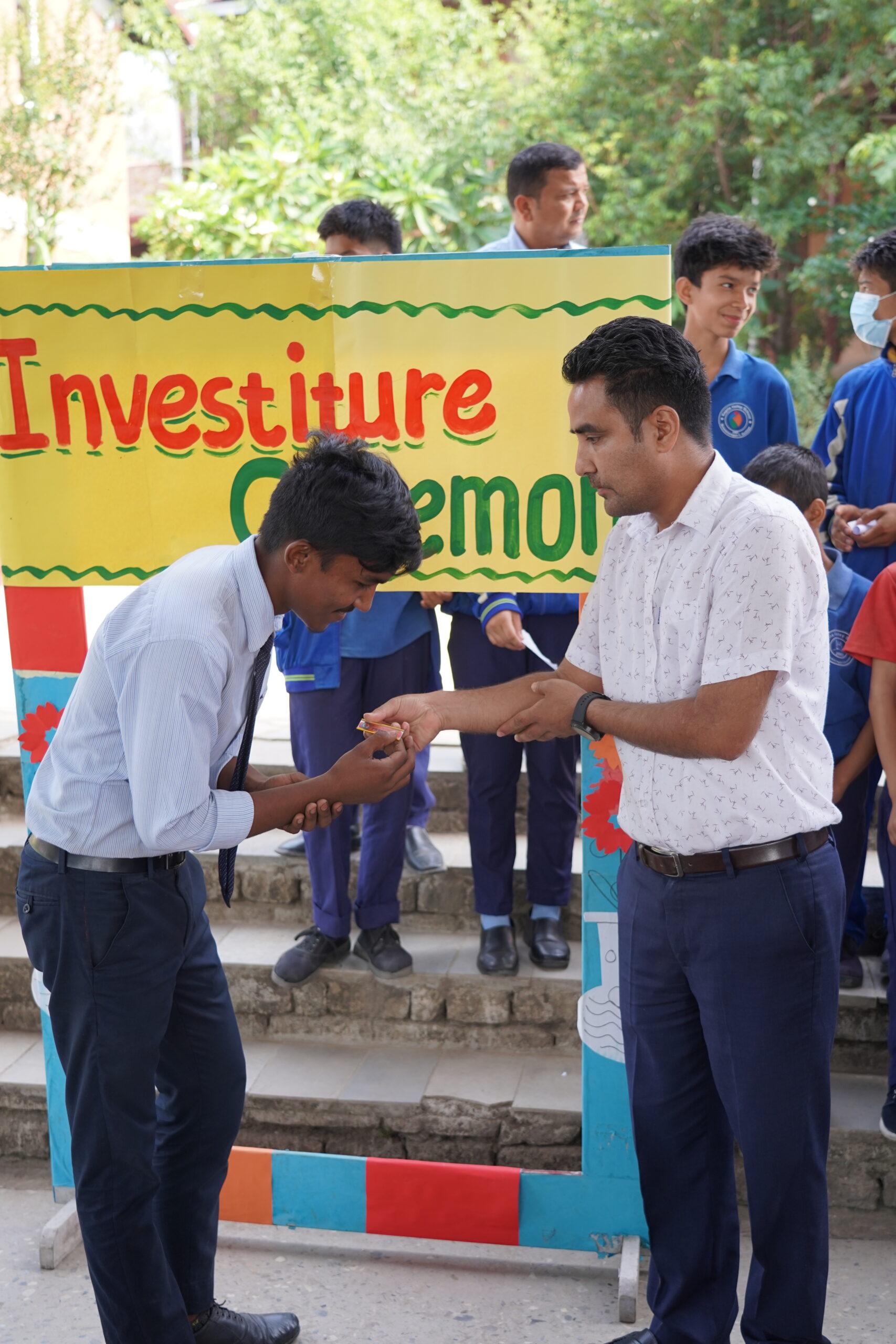
When he graduated, Bishal had to hand over his title to someone who is equally eager, willing, and wanting. “When I think about my childhood in Kopila Valley School, I immediately think of warmth, bright, hopeful, and feeling grateful. That hopeless young boy swimming in the muddy river has crossed the bridge of that river, and is surfing the waves and tides of life effortlessly.”
Bishal is currently pursuing a Bachelor’s degree in Business Administration at Mid-Western University in Surkhet. Internships at several banks kindled his passion for working in the business sectors, whether it’s opening his own business one day or working for banks. After becoming the leader he wants to be at school, he wants to spark change in the outside world.
In his second semester right now, Bishal is taking on leadership roles at his college. “I think this happens to everyone. But there is one corner in my mind where I know very well what I am, which is a small, very small human being. But I have a much bigger purpose in life, which is to be a role model for my newly-born niece, to be a son my mother can rely on when she ages with time, a brother my sister can be proud of, and a fine successful graduate Kopila Valley School raised.”
“If there is one thing I have learned so far, it is that the future never falters, unless you ignite the present in flames. Remember, what you do today builds the ground you’ll walk on tomorrow.”