
ALL TOO WELL
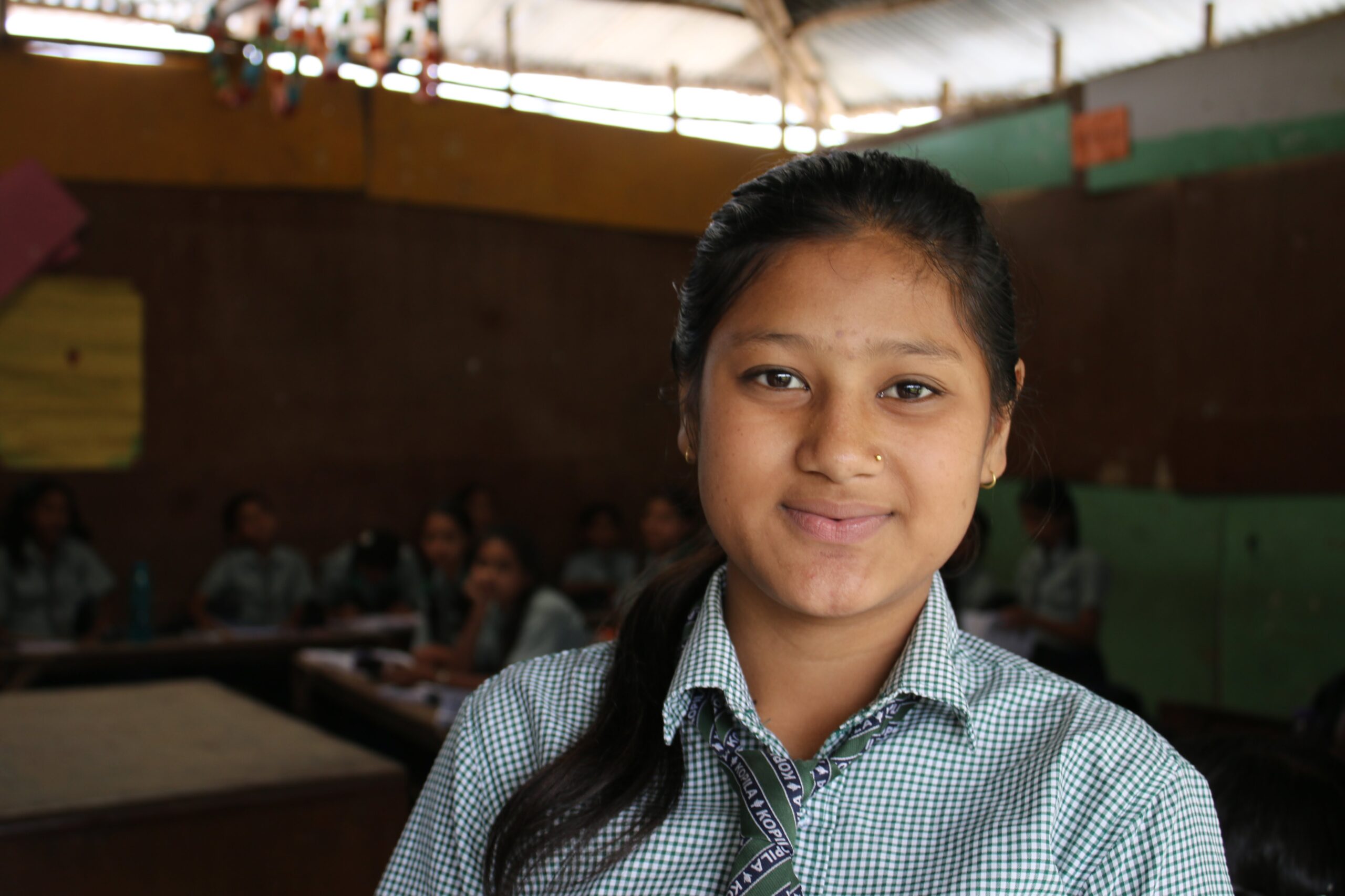
The last school bell rang like the end of a song everyone knew by heart but never wanted to finish. It echoed through the sunlit corridors of Kopila Valley School, bounced off old notice boards, and fluttered out the open windows like a bird finally set free. Outside, students screamed, laughed, cried, and clung to each other like tomorrow was a myth. And maybe it was.
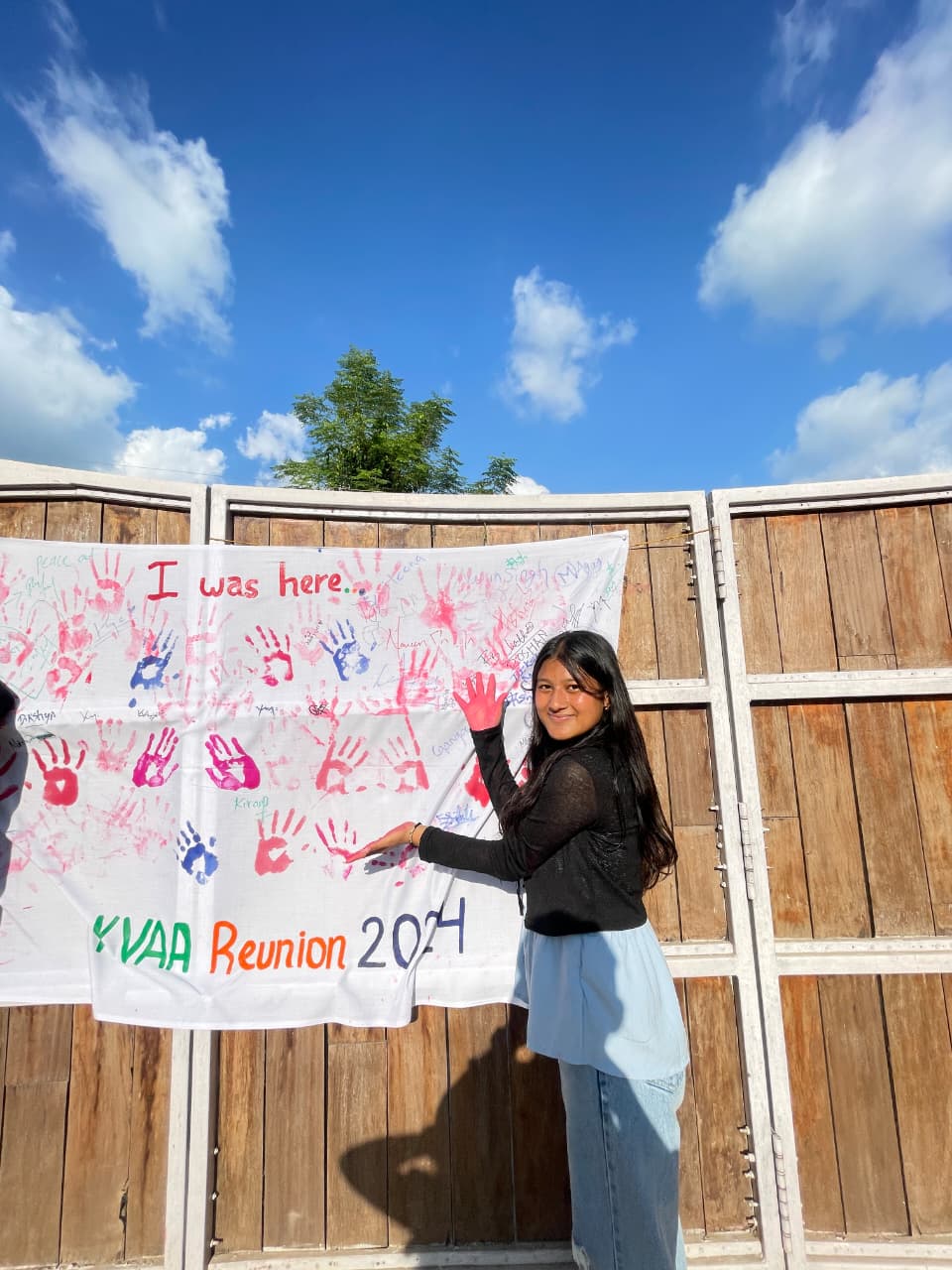
Asmita stood in the middle of it all, calm in the chaos. Her sky blue shirt was imprinted with her friends’ and classmates’ messages to her. The messages seemed to weigh down on her as if they sensed her sadness. 2024 felt like a very short year for her. She remembered when she couldn’t wait to finish her +2 classes, but when she finally did, she felt strange, as if she was going away forever. Perhaps she was.
“This is the moment you had dreamed of. For years, you filled diary pages with plans and moonlit ambitions, sketching a world far bigger than your hometown. Why are you scared?” She scolds herself silently. Now that the moment had arrived, it didn’t come with fireworks. It came with silence. She will miss her friends, she will miss morning assembly, lunch, playing football, playing kabaddi (Nepali national sport), volleyball, reading her favorite book, hiking with her classmates, and all the things she became at Kopila.
“Kopila is my second home, you know,” Asmita shares with a smile. “I was born in a small, remote village called Kalikot in Nepal, but I didn’t stay there for long. When I was around five or six, my family moved to Surkhet in search of better opportunities. We rented a single room where all five of us–my parents, my two brothers, and I–lived together. Even though it was just one room, it never felt cramped. It felt like home–warm, safe, and full of love.”
Fortunately, Asmita’s journey led her to Kopila, where she was able to enroll and start her education from a young age. She joined Kindergarten.
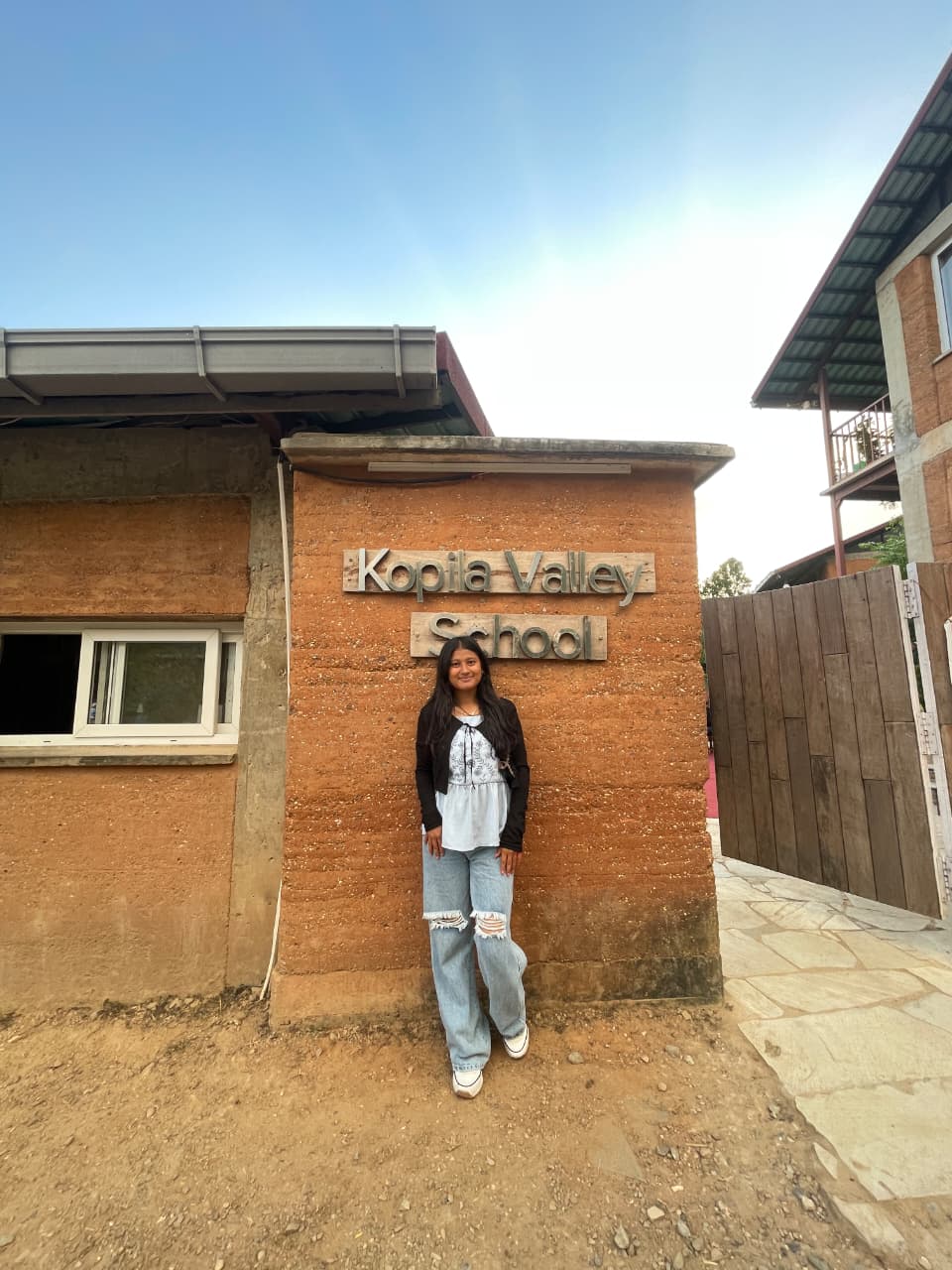
“When both your parents are uneducated and have no steady source of income, finding support like Kopila is truly a blessing. My parents didn’t have to worry about my tuition, school supplies, meals, or even my uniform. That allowed them to focus on my two brothers, who studied in a government school. Being a Kopila student felt like attending one of the most prestigious schools in the entire Karnali region. People often praised me, saying I must be really smart or that I probably spoke excellent English.”
When that last bell rang reminding her that her time at Kopila is over, Asmita realized in that moment, “Kopila Valley School was never about the big things for me. It actually was about the little moments that felt like magic. About the simplest of seconds that made me smile, about the genuine experiences that filled my heart with joy, about the conversations that made me believe in kindness and compassion, about surrounding myself with people that felt like sunshine. These little things ultimately showed me bigger things, which was the will to pursue a bachelor’s degree, a career, financial independence, and a brighter and successful future.”
COURAGE LEADS TO HOPE
One day, Asmita’s parents decided to move back to their village. Asmita was on a mission to find a college that excelled in Civil Engineering. But the sudden news threw her into a whirlwind of uncertainty. For the first time, she was faced with a decision she hadn’t prepared for: stay behind and live alone, or give up on the path she had carefully envisioned. She had never lived by herself before—hadn’t even considered it—until that moment arrived. The house felt emptier even before they left. The laughter of her brothers, the warmth of shared meals, the quiet comfort of knowing someone was always there, it all began to fade.
“It was time for me to step out of my comfort zone and choose my future instead of avoiding it. Our society believes dwelling on comfort for girls is smart. In our society, comfort is often mistaken for protection. We’re told that curfews will keep us safe, that traveling only with company is wise, that staying within the boundaries others have drawn is the smart thing to do. And for a while, it might seem true. But what society fails to understand is this: no amount of comfort can shield us from the unexpected. Life doesn’t ask for permission before testing us. The real challenges don’t wait for us to be ready. They arrive unannounced—raw, real, and relentless. And when they do, it’s not comfort that carries us through. It’s courage.
“So, I chose to be courageous.”
Asmita didn’t have it all figured out. She was scared. She had never lived alone before, never navigated life without the safety net of family. But she had a dream to become a civil engineer, and she wasn’t ready to let it go. Thanks to a hand extended by the Futures Program and the Higher Education Fund (HEF), that dream found its footing. With their support, she secured admission to Lumbini Technological University, Nepalgunj. The acceptance led her to a new city and to a declaration that she can do this!
“My enrollment led me to move to a new city,” Asmita confesses. “Moving to another city all alone meant starting over, again. I’ll tell you this, it’s never easy, but it gets better. I’m in my second semester, and it has finally dawned on me that this is my life for the rest of my four years. And this chapter of my life, which I am enjoying, is only possible because of the HEF.”
In the thrill of life and adulthood, Asmita is thriving day by day. When she is free, she spends her time playing football with her new friends, and on breaks she makes sure that she visits her parents back home. This chapter is hers—and she’s not just living it, she’s shaping it with intention, courage, and grace. Each day, she adds a new line to her story with experiences, memories, lessons, and goals.
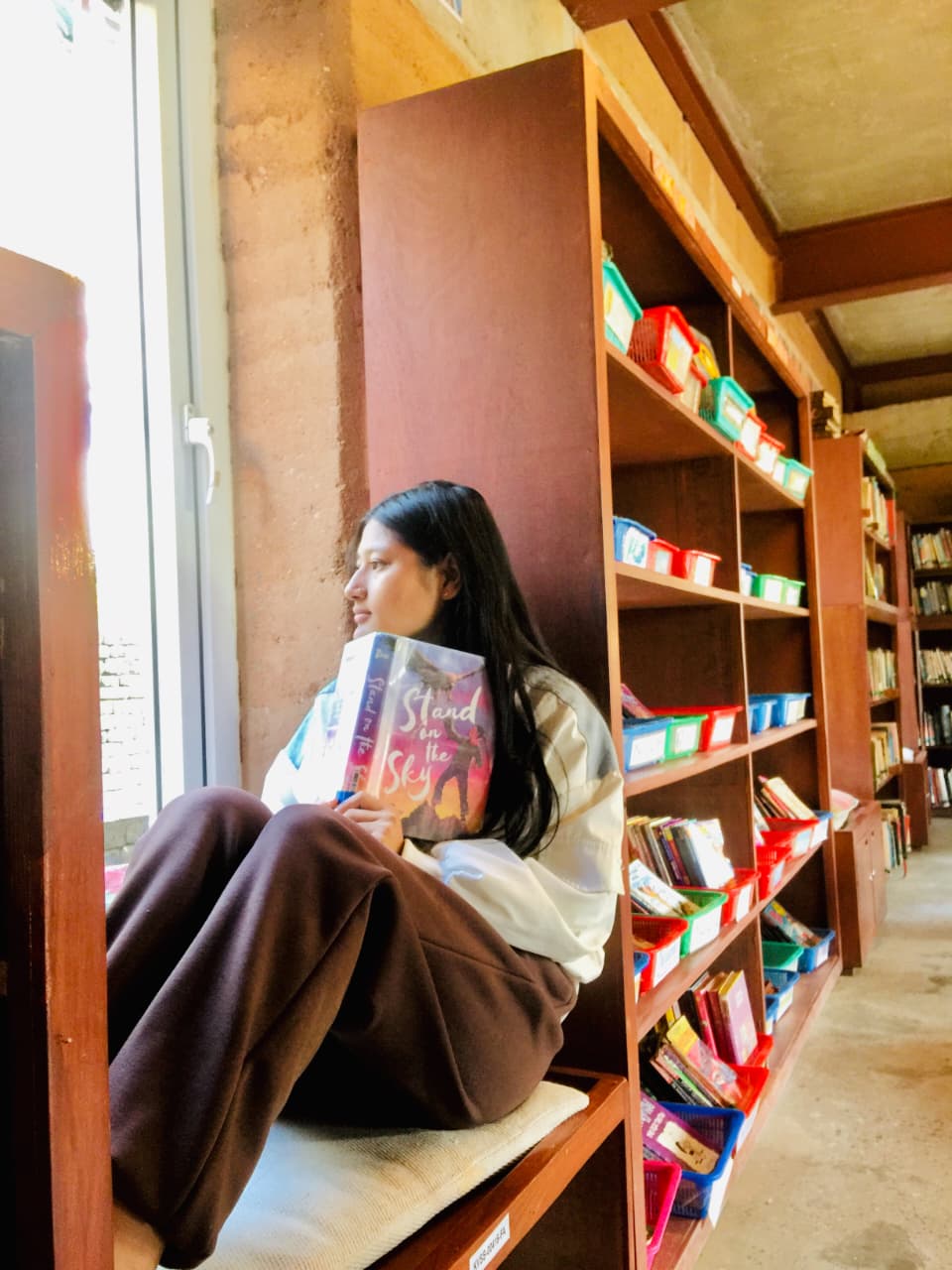
“Your expectations are not extremely high. All you have to do is hold on to them and do what you must do, even if it means stepping out of your comfort zone.”
