
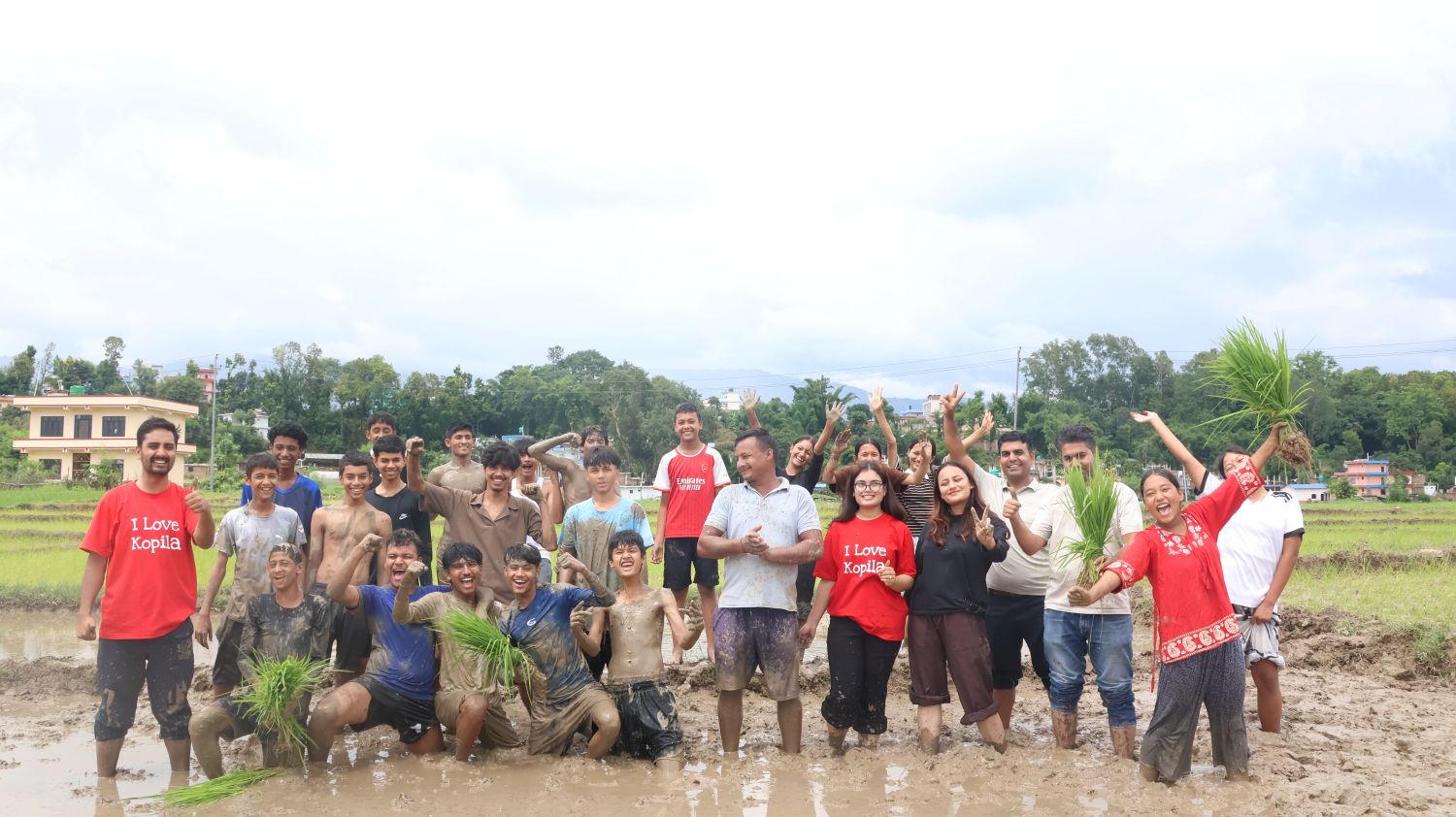
It’s a fun and messy tradition. Have you heard about rice mud racing, or our local afforestation projects?
This past month, students at Kopila Valley School have been busy planting – from rice fields to local forests. We love watching them learn outdoors about plant life cycles and where food comes from.
In Nepal, the arrival of the monsoon is more than a change in weather. It marks the beginning of one of the country’s oldest and most cherished and celebrated traditions; rice planting.
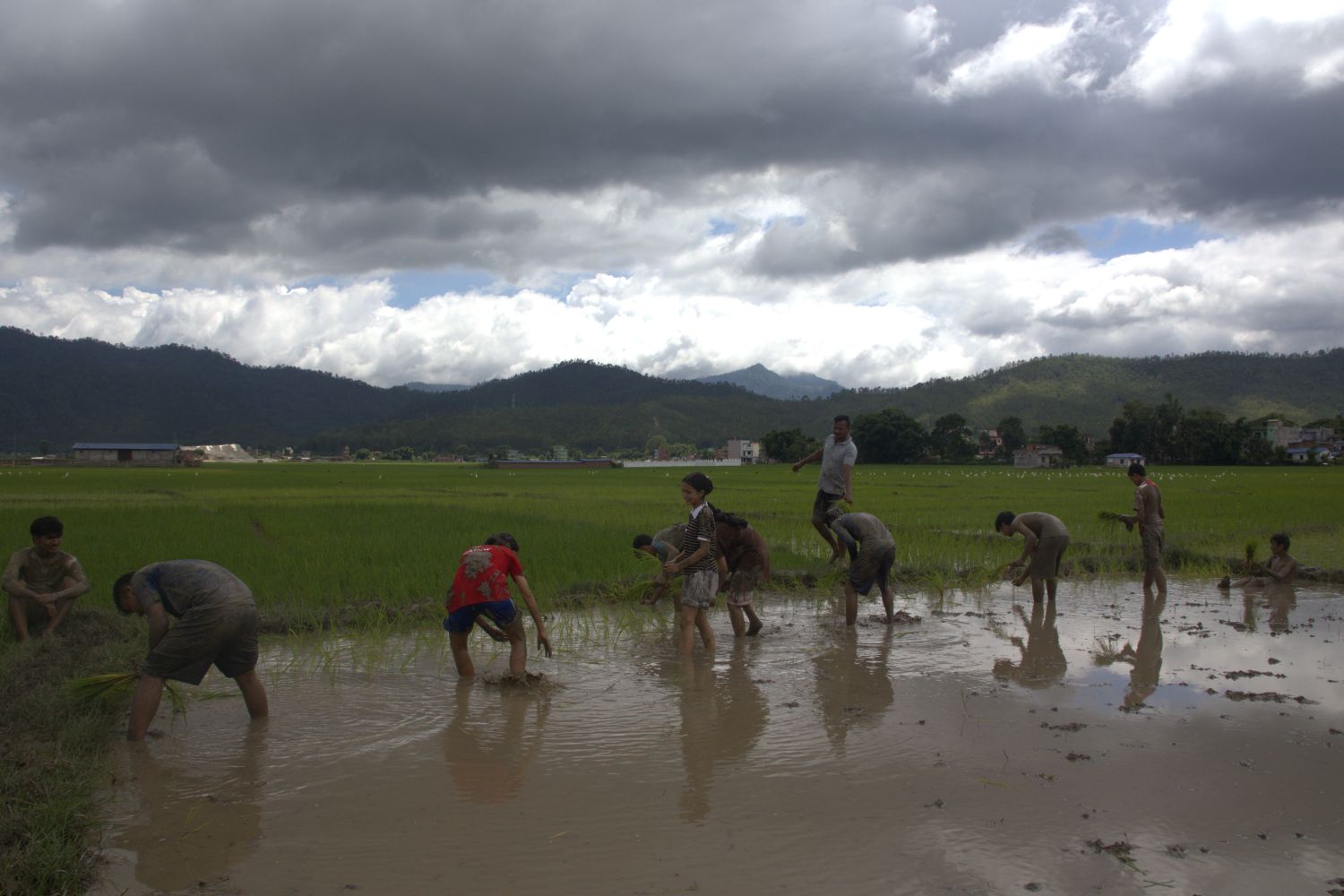
As the first rains soften the earth, fields that sat dry and empty for months are transformed into shimmering patches of life. Across villages, families and neighbors gather to transplant young rice seedlings into muddy paddies.
Songs drift across the fields, laughter echoes through the rain, and hands work together in a rhythm passed down through generations.
The season is so deeply woven into Nepali culture that it is celebrated every year as National Rice Planting Day (Ropain Diwas), which is a joyful occasion where communities plant rice, share traditional foods like dahi chiura (beaten rice with yogurt), and celebrate the crop that feeds millions of people across the country.
This year, our Grade 9 students became part of that tradition.
PLANTING TOMORROW’S LUNCH
On a cloudy morning, our students traded their desks for a muddy rice field.
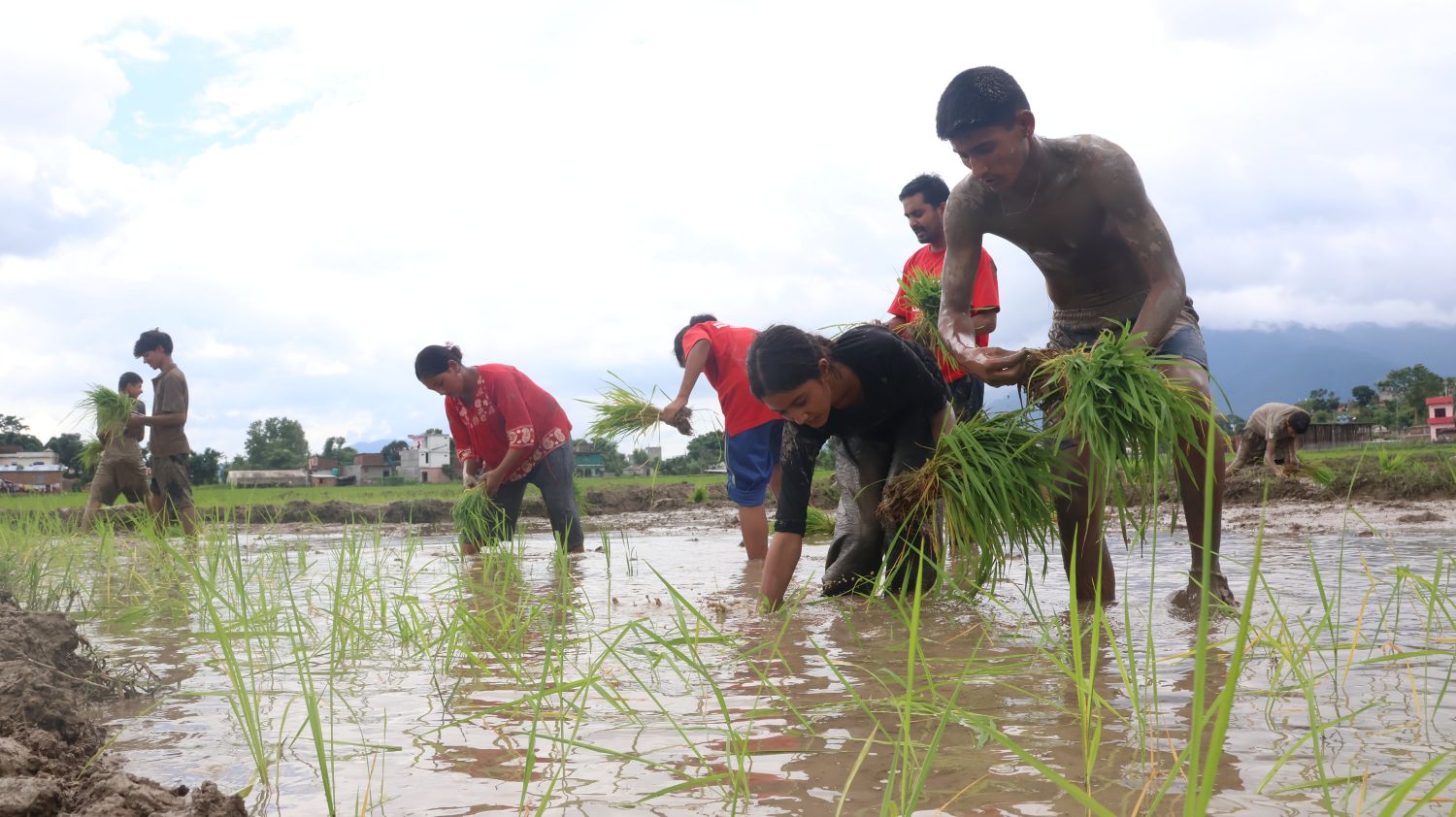
Standing ankle-deep in soft earth, they joined our farmer partners from the Participatory Guarantee System (PGS) group and the Sustainability Team in planting rice. They stood there not as visitors watching from the sidelines, but as hands contributing to the harvest.
Hour after hour, rows of young rice seedlings disappeared into the field, filling the barren field with rice seedlings. The work was slow, repetitive, and surprisingly demanding. Yet the day was filled with laughter.
Students splashed through the mud, challenged one another to friendly races across the field, and discovered that getting dirty is often part of meaningful learning and is oftentimes the most rewarding.
There are some lessons that can never be taught inside a classroom.
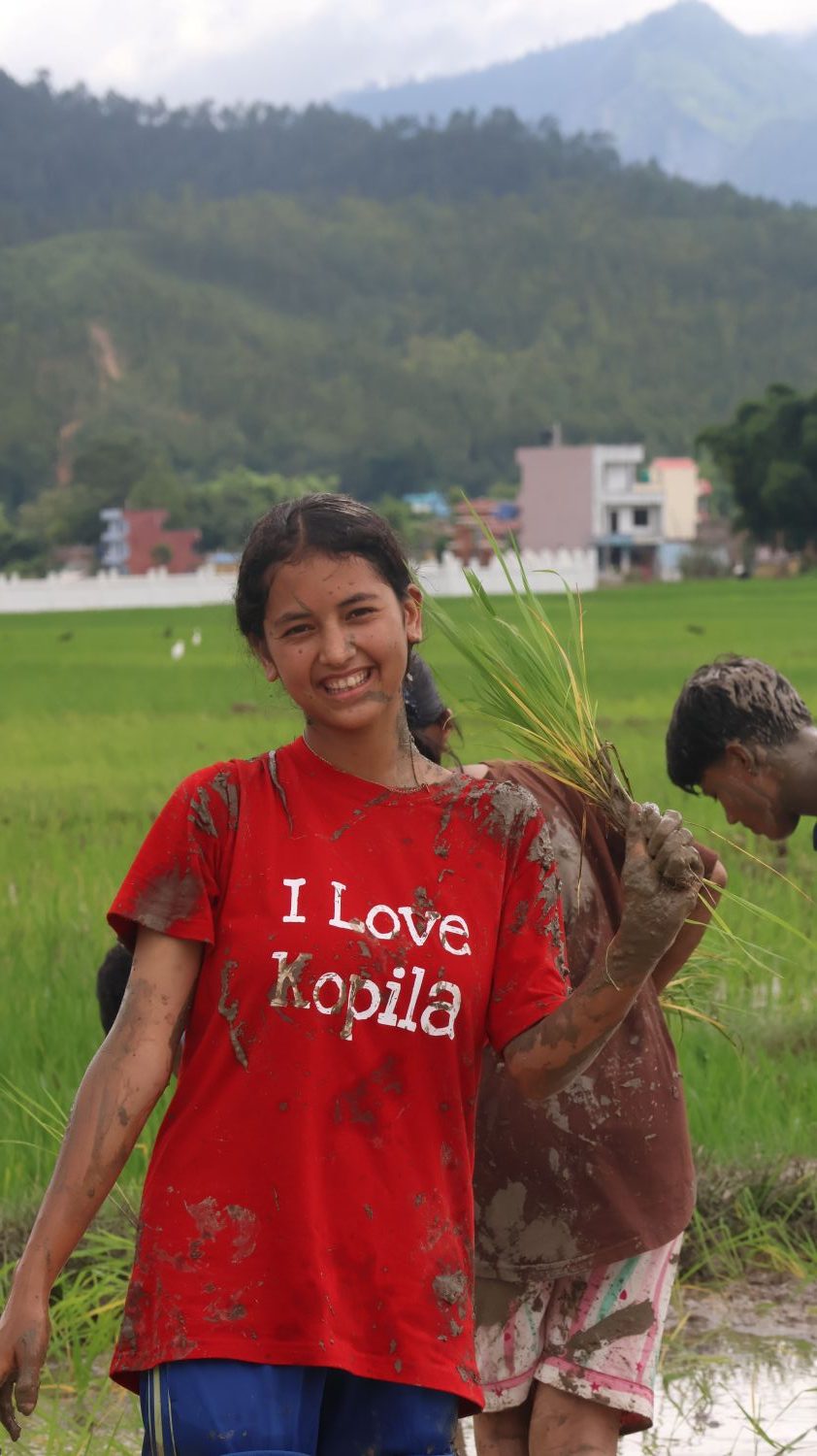
Months from now, the rice growing from those tiny green shoots will find its way onto their lunch plates. When it does, the satisfaction of knowing, “I helped grow this” will be engraved in their hearts, making the meal even more delicious.
Experiences like these are what sustainability education looks like at Kopila Valley. It lives in the soil beneath our feet, in the stories shared by local farmers, in the rhythm of working together, and in the understanding that food is something we nurture, not something that simply appears on the table.
The students didn’t just stop here.
They geared up with the local community to restore the forest.
PLANTING FOR GENERATIONS
While one group of students planted food, another journeyed into the forest carrying something just as valuable: young trees, with the first rays of sunlight.
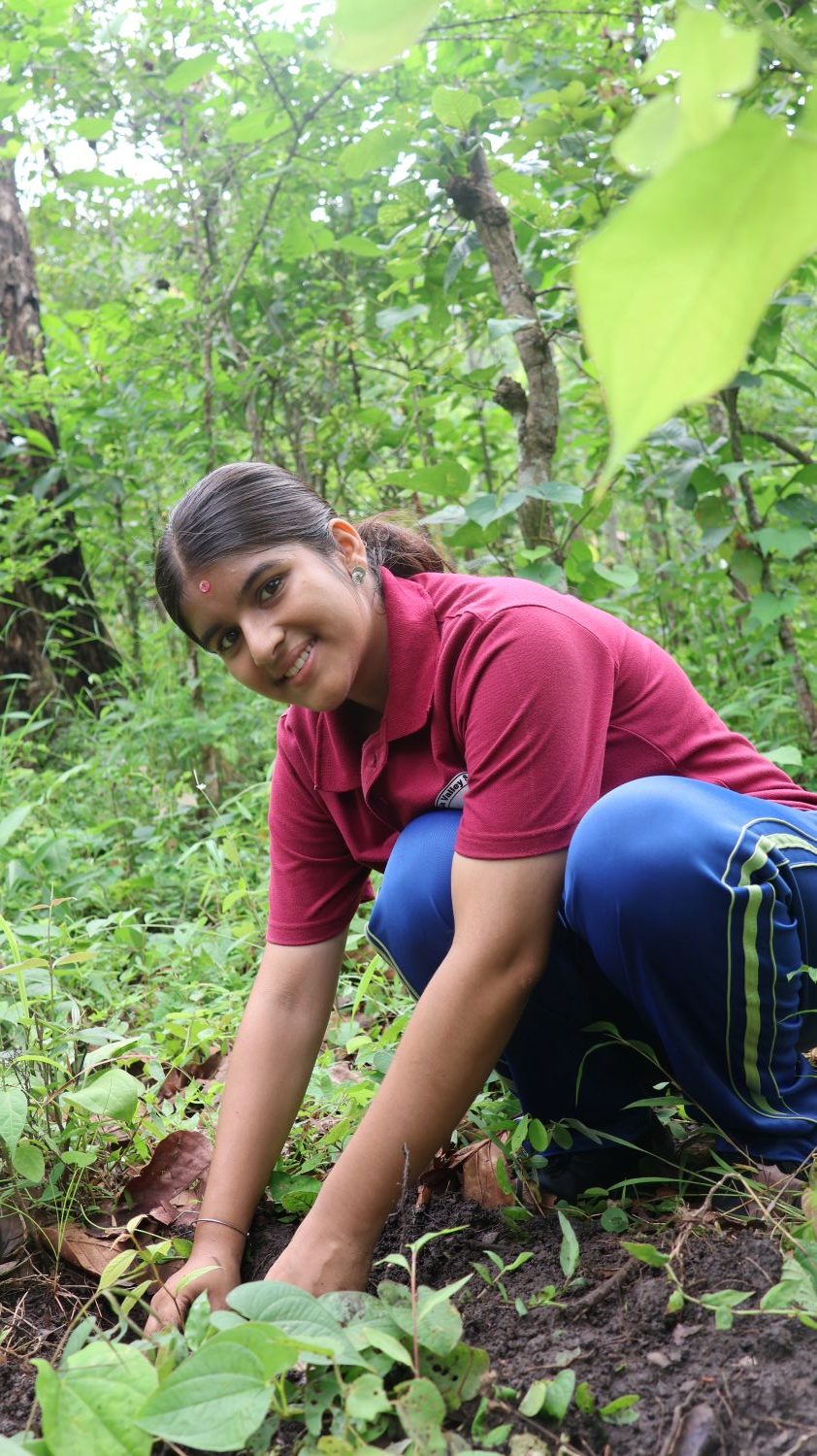
Deep within the forest, our students worked together to plant native saplings that will continue growing long after they have graduated. These trees will stabilize the soil, provide habitats for wildlife, improve air quality, and help restore the ecosystems that future generations will depend on.
It’s a moment of pride to see students work along with their own community to restore nature’s gifts. They carried the trees by themselves, dug the holes, planted the young trees and watered them. They planted almost 150 young trees!
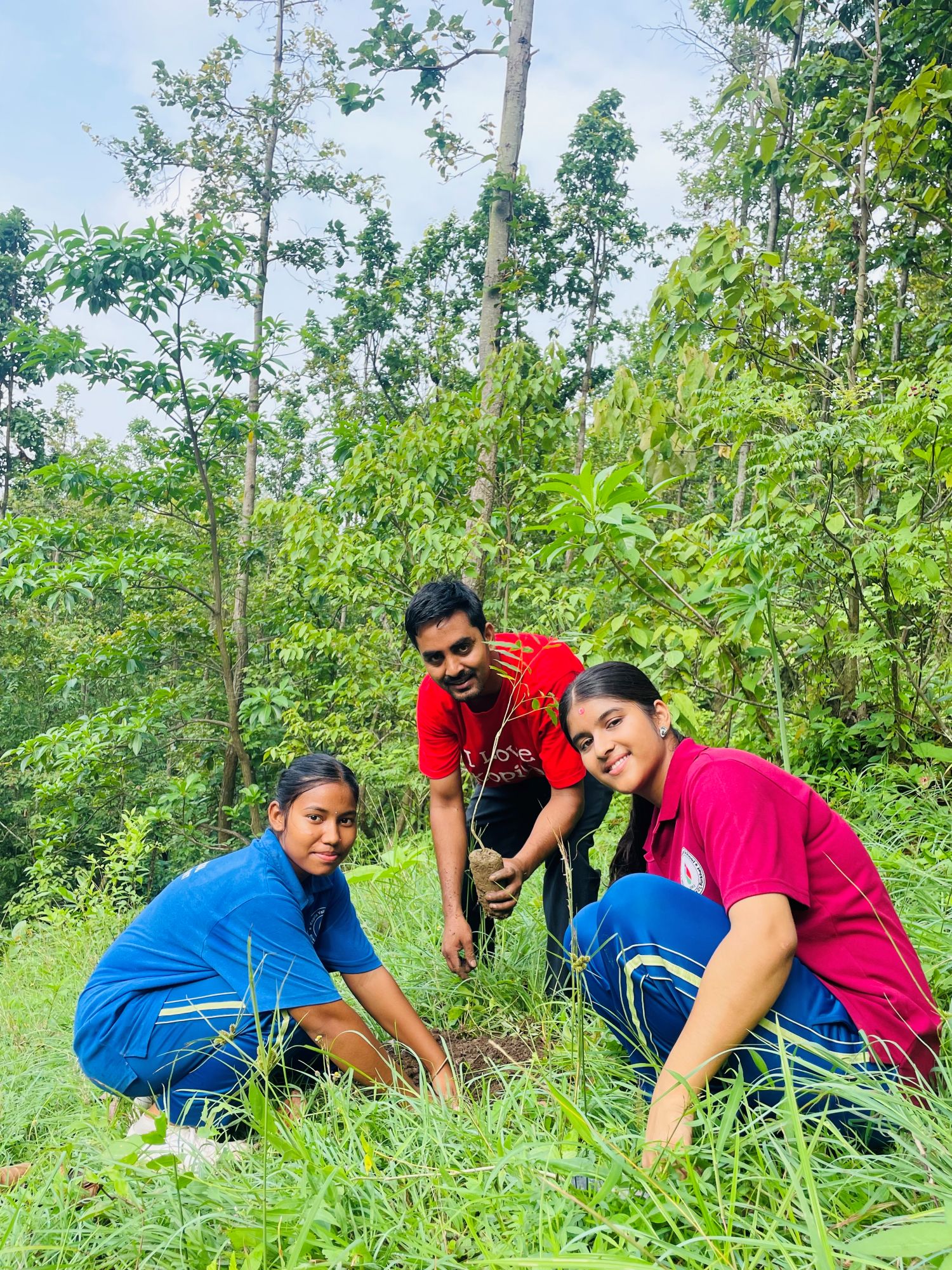
They also went back to check on the trees they planted a year ago, around the same time.
“This is my tree!”
“This is mine!”
“This is the one I planted!” They all cheered. Some of the trees grew as tall as the students.
One experience taught our students where food comes from. The other reminded them where our future depends.
